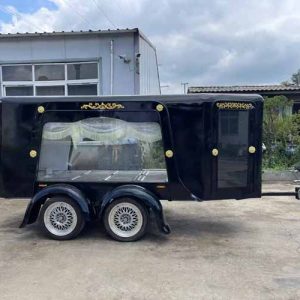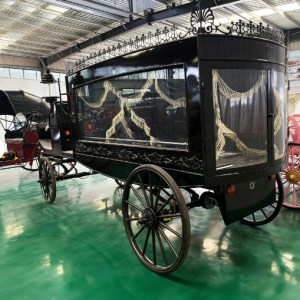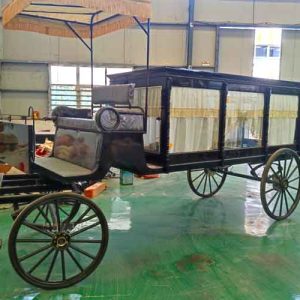
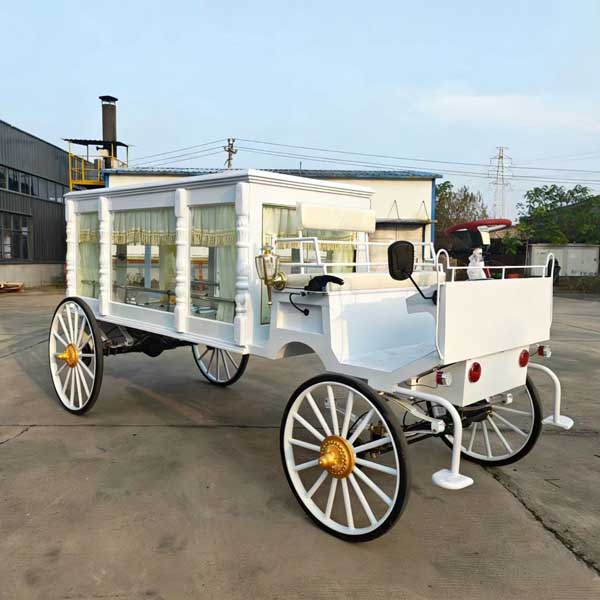
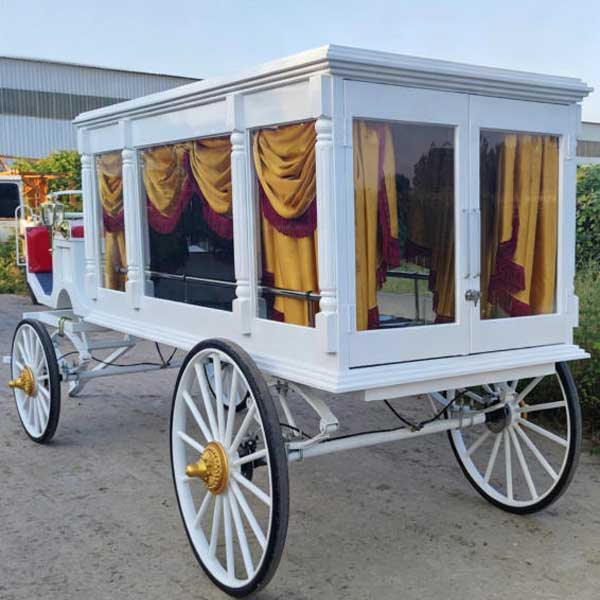
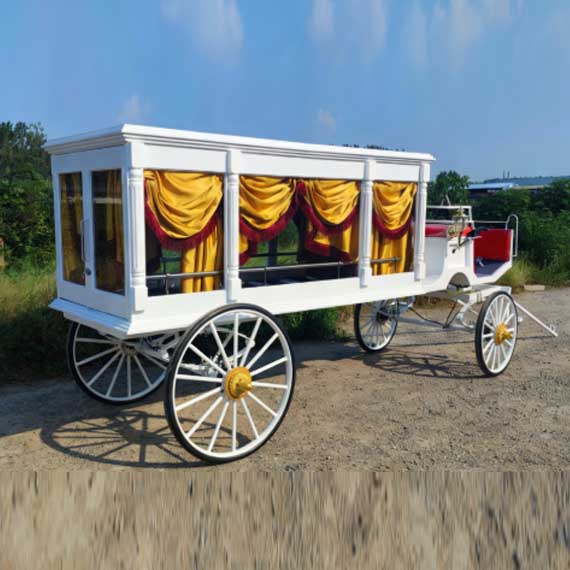
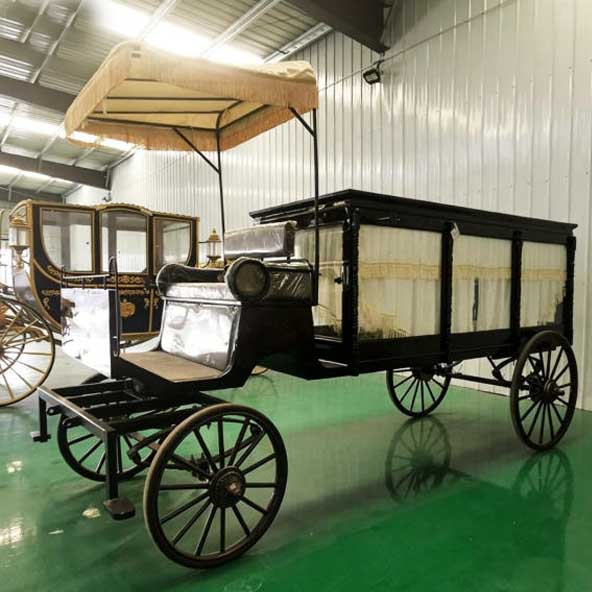
Horse-drawn funeral carriages are traditional hearses powered by horses, primarily used for transporting the deceased. Their development and characteristics are as follows:
Historical Origins: Horse-drawn funeral carriages can be traced back to the 19th century, initially used in places like the Maine State Prison, and gradually phased out by the 1930s. Before the widespread use of automobiles, it was the mainstream means of transporting remains.
Structural Features of Horse-Dawn Funeral Carriages: Typically consisting of a horse-drawn carriage, with a door (possibly a front door) at the front and a specially designed rear section for carrying the coffin. Some designs referenced bus chassis to improve load-bearing capacity and stability.
Technological Evolution of Horse-Dawn Funeral Carriages: In 1909, the United States first combined horse-drawn carriages with internal combustion engines, creating the first gasoline-powered hearse. Subsequently, motorized hearses gradually replaced traditional horse-drawn carriages.
In the 1920s, Japan developed the “Miya-kata” (palace-type hearse), where the rear of the carriage was modified into a wooden structure resembling a Buddhist temple, becoming a type of hearse with regional characteristics.
The cultural impact of horse-drawn funerals: Horse-drawn hearses retain unique cultural symbols in different regions. For example, the Japanese kojika (miya-style) hearse remains a choice for some families’ funeral rites.