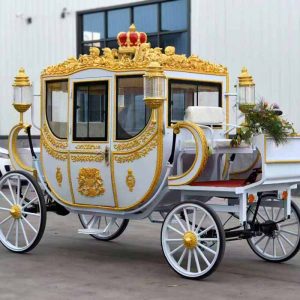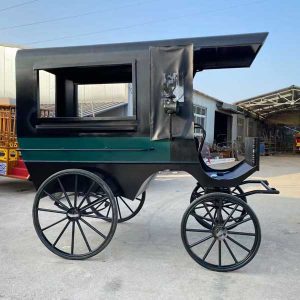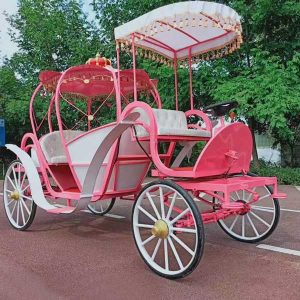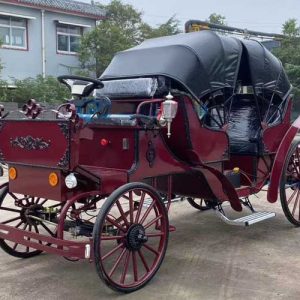
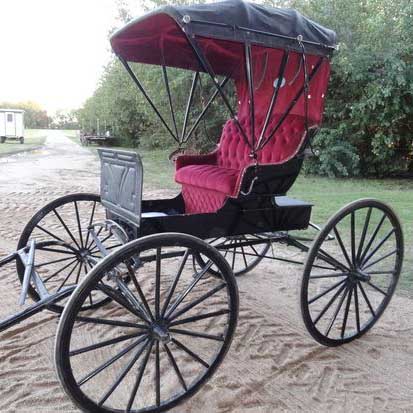
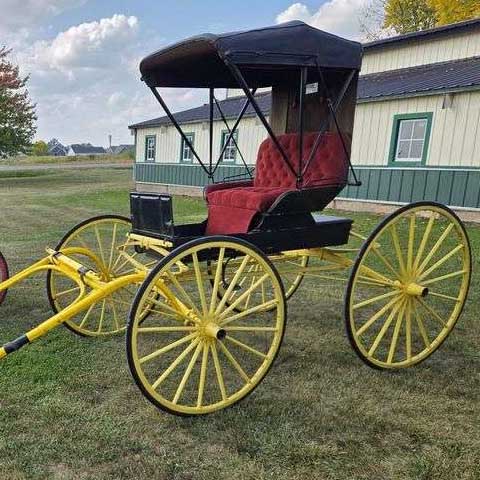
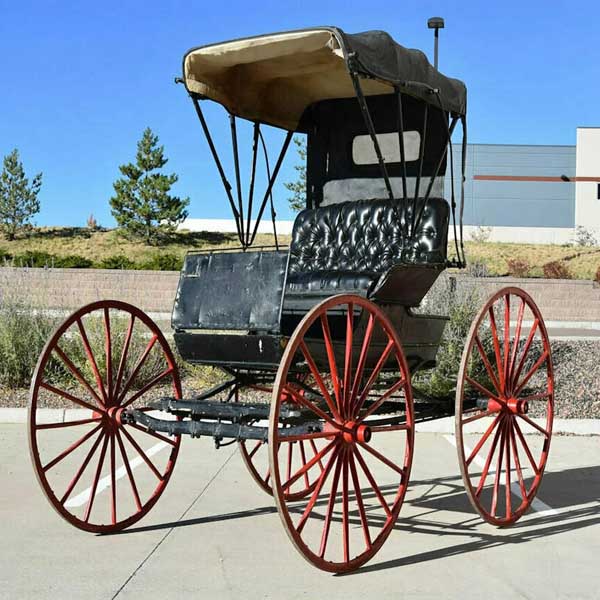
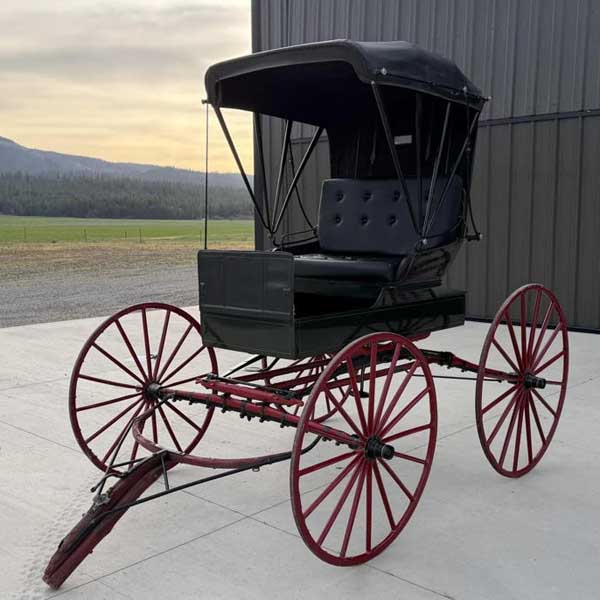
“Horse Drawn Doctor Buggy” refers to the use of horse-drawn vehicles by doctors as a means of transportation for house calls or transporting patients before the widespread use of automobiles. This practice was prevalent from the 19th to the early 20th century, especially in rural areas, pastoral regions, or areas with poor transportation.
Main types and characteristics of doctor’s buggy:
Doctor’s Buggy: A lightweight, single-horse drawn carriage, compact in structure and maneuverable, suitable for navigating narrow country roads. It features a folding roof for rain and sun protection, and some models also include folding footrests and storage space for carrying medical kits. This type of carriage is also known as a “Physician’s Phaeton” and was widely used in the United States.
Doctor Wagon/Doctor’s Carriage: A more enclosed and stable design, suitable for long house calls or in inclement weather. The carriage is typically made of wood and includes oil lamps, a waterproof curtain, and a separate driver’s seat. Some high-end models even have plush interiors and foot warmers, reflecting the doctor’s social status.
Brougham: Particularly popular in Britain, this is a four-wheeled, enclosed, lightweight carriage favored by urban doctors for its privacy and comfort. Senex once noted: “These carriages were especially valued by doctors, as they allowed them to make it more comfortable to go to patients’ homes.”
Historical background and social significance of the horse drawn doctor buggy:
The horse drawn doctor buggy was not only a means of transportation but also a symbol of professional status. In the 18th century, the British physician Radcliffe even traveled in a six-horse carriage to conduct medical rounds, demonstrating his authority.
Before the widespread use of automobiles, doctors relied on carriages for “mobile medical care,” especially in remote areas, serving a function similar to today’s ambulances.