
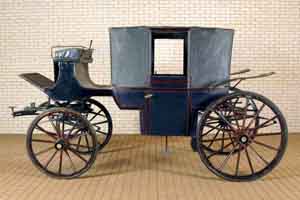
Historically, the horse drawn carriage was the most iconic mode of transport in Europe; today, I’d like to introduce you to the most popular styles of European carriages.
1. landau horse drawn carriage.
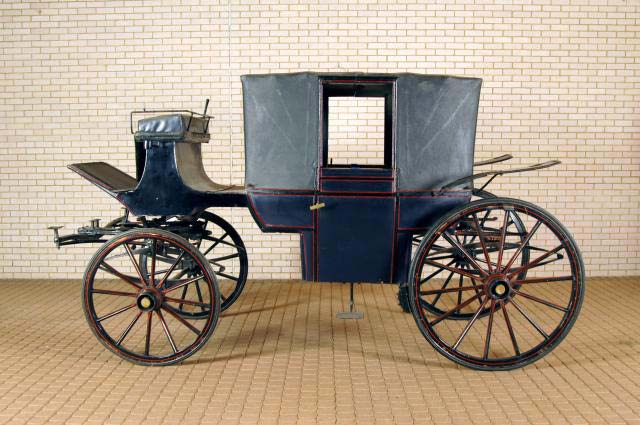
The landau horse drawn carriage takes its name from the German city of Landau; originating in the early 18th century and introduced to Britain in 1743, it rapidly became a standard ceremonial carriage for the European aristocracy, reaching the height of its popularity during the Victorian era.
The British Royal Family commissioned specific models—such as the Royal Landau and the Ascot Landau—for use at coronations, royal weddings, the Royal Ascot races, and state receptions. Buckingham Palace’s Royal Mews still houses several antique landau carriages, and the vehicle remains one of the five classic types of traditional European carriage.
Key Features
Long, four-wheeled body; front and rear folding soft-tops; two sets of facing seats; fully removable roof converting it into a completely open-air vehicle; no enclosed glass windows, featuring open sides; spacious 6–8 person capacity.
Historical Uses
Royal garden tours, group outings for the nobility, festive city parades, countryside excursions, and dignified daily social transport for families.
Modern Applications
Group sightseeing at tourist attractions, temple fair processions, large-scale estate hospitality, and group transport for wedding parties.
Pros and Cons
Pros: Maximum interior space, unobstructed views, and an impressive presence for parades. Cons: Lacks enclosed, rain-proof structure; poor all-season versatility.
2. Victoria Horse Carriage
The prototype of this carriage originated in France and was introduced to Britain in 1869 by the Prince of Wales (later King Edward VII). Named after Queen Victoria, it quickly became a sensation across Victorian Europe, serving as the most popular lightweight carriage for aristocratic ladies to take leisurely drives in the park or engage in urban socializing.
Positioned as a vehicle for “affordable luxury” transport, it was suitable for both aristocratic and middle-class families. While not classified as a top-tier ceremonial carriage, it excelled through its elegance and maneuverability; to this day, it remains the most widely used style of European carriage for weddings and tourist attractions worldwide.
Key Features
Semi-open design with a single folding canopy covering only the rear passengers; no doors; forward- and rear-facing seating; low-profile, lightweight body with soft, minimalist lines; 4–6 passenger capacity.
Historical Uses
Leisurely park drives for ladies, afternoon tea visits, and short urban trips; a “light luxury” vehicle popular across social strata, used by both the middle class and the aristocracy.
Modern Applications
A top choice for lawn weddings, sightseeing in historic towns, and outdoor wedding photography; horse-drawn and electric versions offer the highest production volumes and best value for money.
Pros and Cons
Pros: Lightweight and easy to maneuver, convenient entry and exit, versatile and stylish, low maintenance costs; Cons: Poor protection against rain.
3. Glass State Coach
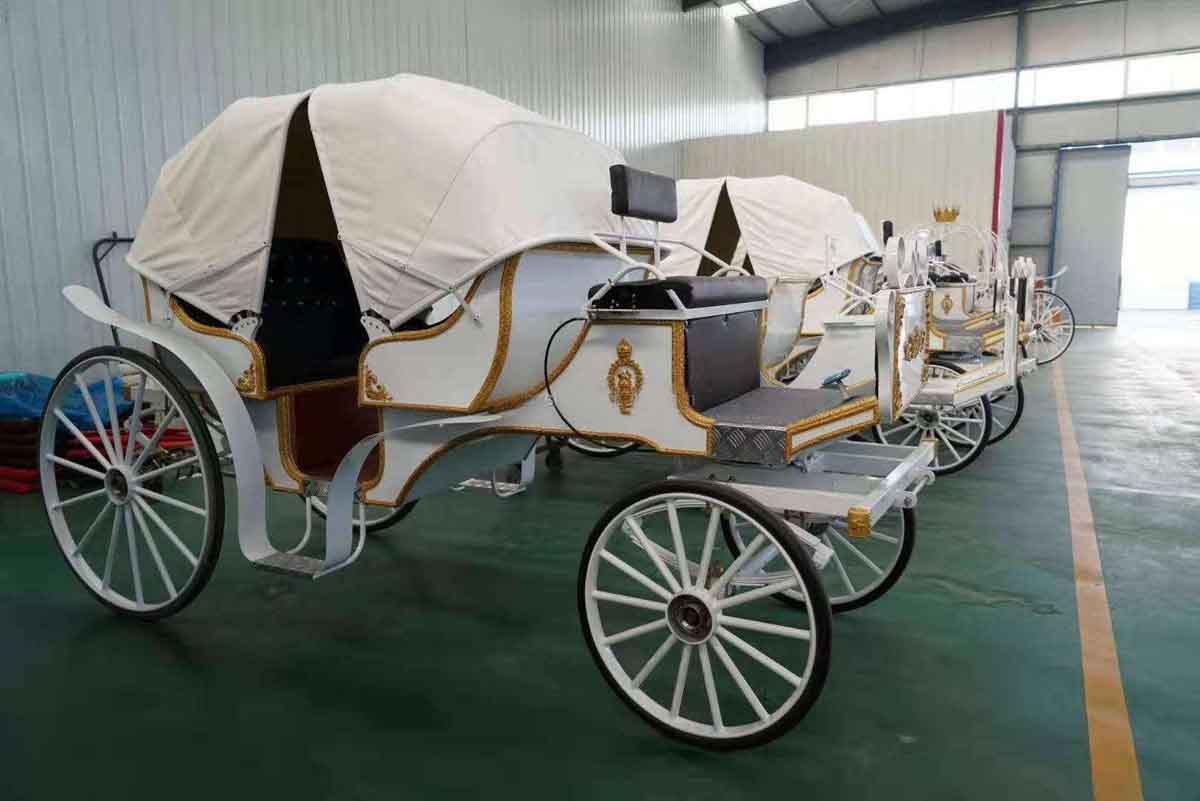
Built in London in 1881 and officially inducted into the royal carriage fleet for the coronation of George V in 1911, the Royal Glass Coach is housed at the Royal Mews of Buckingham Palace and stands as an iconic, fully enclosed ceremonial carriage of European royalty.
It serves as the exclusive carriage for royal weddings—having carried Queen Elizabeth II, Diana, Princess of Wales, and Catherine, Princess of Wales, on their respective wedding days—and is also used for welcoming heads of state, military parades, and the State Opening of Parliament. Positioned as a high-end ceremonial vehicle, it differs from open-top leisure models such as the Landau and the Victoria.
The “Royal Glass Coach” models currently sold for weddings or tourist attractions are all replicas of this classic royal design.
Key Features
Fully enclosed, box-shaped carriage body featuring large, single-pane tempered glass windows on three sides; adorned with three-dimensional gilded relief work and a crown-shaped roof ornament; features a luxurious leather interior and built-in ambient lighting; fully sealed doors provide protection against wind and rain.
Historical Uses
Used for royal coronations, royal weddings, state receptions, and major official ceremonies; truly the “royal luxury vehicle” of the horse-drawn carriage world.
Modern Applications
High-end estate weddings, VIP reception at hotels, parades for major city celebrations, and a picturesque landmark for tourism and photography.
Pros and Cons
Pros: Delivers an unparalleled sense of ceremony, fully enclosed for year-round use, and exudes an air of regal grandeur; Cons: Heavy and bulky, high production cost, and difficult to maneuver around tight corners.
4. Hansom Cab
Designed and patented in 1834 by the British architect Joseph Hansom—and originally known as the “Patent Safety Cab”—this vehicle served as an early form of “taxi” on the streets of London, Paris, and New York during the 19th century.
Following design improvements in 1836, it became immensely popular; at the height of the Victorian era, over 11,000 of them operated on the streets of London, and the vehicle is famously featured as a mode of transport in the Sherlock Holmes stories. Introduced to Shanghai in the late Qing Dynasty—where it was commonly known as the “Hansom carriage”—it was the only two-wheeled model among the five major types of authentic European horse drawn carriages.
Key Features
Compact two-wheeled body accommodating only two passengers; the driver’s seat is positioned high at the rear, while the low-slung body offers great agility and effortless steering.
Historical Use
Short-distance urban transport and street-hailing; a common mode of travel for ordinary citizens, serving a function similar to the modern taxi.
Modern Applications
Vintage-style sightseeing in European towns, props for 19th-century street scenes in film and television, and small-scale photo-op attractions.
Pros and Cons
Pros: Compact size allows for easy navigation through narrow alleys; evokes a strong vintage atmosphere. Cons: Limited passenger capacity and average stability; unsuitable for large-scale events.
5. Brougham
Commissioned by Lord Brougham of Britain in 1839, this carriage became a sensation in cities across Europe, replacing the old-fashioned closed carriage as the standard commuter vehicle for the middle class.
Key Features
A small, fully enclosed four-wheeled carriage featuring side-opening doors, single-pane glass windows, and individual upholstered seats; it offered compact seating for four, a fixed (non-removable) roof, and clean, streamlined aesthetics.
Historical Uses
Used for daily urban commuting, travel during rainy winter weather, solo outings for ladies, and social visits; its primary selling points were privacy and protection from the elements.
Modern Derivatives
The “Royal Glass Coach” seen today is essentially a luxury, upgraded version of the Brougham; the compact closed wedding carriage also traces its design origins to this model.
Pros and Cons
Pros: Fully enclosed for excellent privacy, weather-proof, and compact in size. Cons: Cramped interior, relatively understated styling, and less atmospheric appeal for photography compared to the Victoria or Landau models.
We are a professional horse drawn carriage manufacturer in China. If you need these vintage horse-drawn carriages, please contact us; we can provide customized services.