
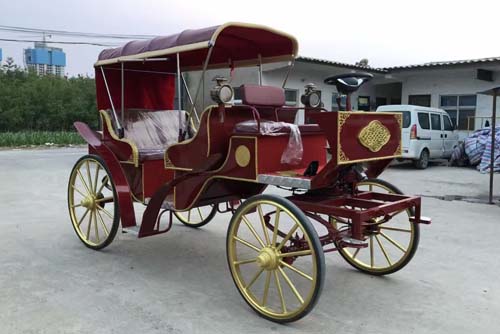
Royal horse carriages generally refer to the luxurious horse carriages used by Western royal families for formal occasions such as state affairs and ceremonies. Their development can be summarized in the following stages:
Origins and the Golden Age (17th–19th centuries)
From the 17th century onwards, horse carriages became a symbol of aristocratic status in Europe, especially after the French court spearheaded the trend, gradually becoming popular throughout Western Europe.
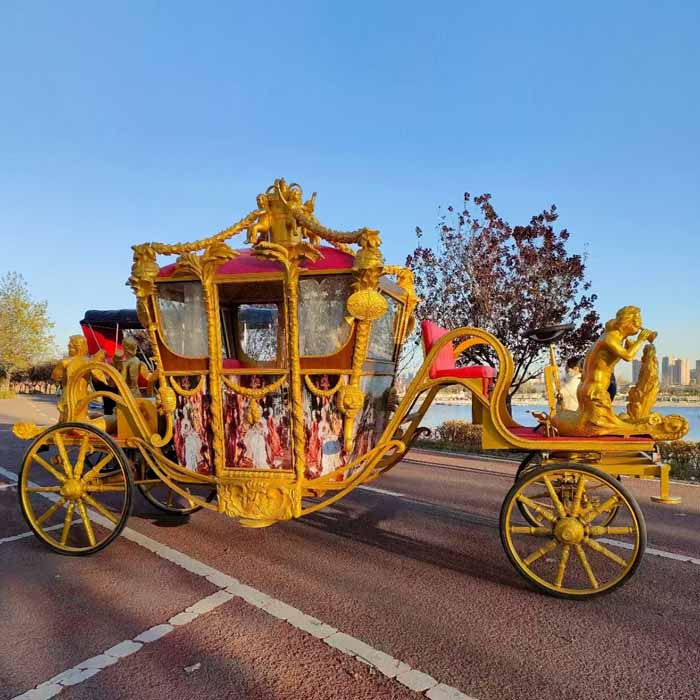
The horse carriages were often made of solid wood and decorated with gilding, emphasizing symmetrical aesthetics and artistry, combining practicality and ostentation. During this period, the British royal family began systematically collecting and customizing carriages for important ceremonies such as coronations, weddings, and the opening of Parliament.
Representative Models and Functional Differentiation (18th–19th centuries)
Gold State Coach: Built in 1762, specifically for coronation ceremonies, made of gilded wood, weighing 4 tons, it became the standard for the coronation of British monarchs from George IV onwards.
The Glass horse carriages: Built in 1881, it was used exclusively for royal weddings; Princesses such as Diana and Kate Middleton rode in it.
Irish horse carriages: Built in 1851, it was used for the opening ceremony of Parliament. It was later damaged by fire and restored in 1989.
Australian Royal horse Carriage: Presented to Queen Elizabeth II in 1988 as a gift to commemorate Australia’s bicentennial, it is equipped with modern features such as electric windows and hydraulic stabilizers.
Modern Transformation and Cultural Continuity (20th Century to Present): With the widespread adoption of automobiles, horse drawn carriages have gradually disappeared from daily transportation, but they are still used in important national ceremonies to reflect tradition and a sense of ritual.
In 2014, Australia created the “Diamond Jubilee State Carriage”. The Royal horse carriages, a blend of historical artifacts (such as Newton applewood and the timber from the Mary Rose) and modern technology (hydraulic stabilization, electric windows), was used for state visits and the 2023 coronation procession of Charles III. The British Royal Family still owns over 100 carriages, housed in the Royal Mews at Buckingham Palace, some of which are still in use.
In conclusion, the development of the Royal horse carriages reflects a shift from a practical means of transportation to a symbol of national ceremony, with its core value moving from mere transportation to cultural heritage and historical symbolism.