
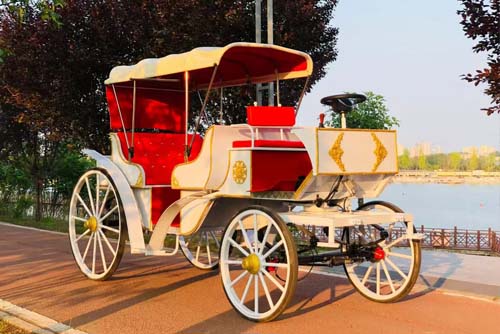
The craftsmanship of wedding horse carriages blends traditional ironwork techniques with decorative art, focusing on the combination of handcrafted mortise and tenon joints, intricate carvings, and practical functionality. The following explains key aspects of the process, including materials, decorative features, and modern applications.
Craftsmanship and Structural Design: Wedding carriages typically follow traditional mortise and tenon construction, avoiding nails or glue to ensure structural stability and ease of disassembly. The process includes:
Design and Planning: Drawings are created to determine the carriage’s proportions and functional areas (such as the driver’s seat and passenger compartment).
Material Selection and Processing: Steel plates are used and undergo dozens of processes, including cutting and polishing. The wheels often feature a spoke design to enhance load-bearing capacity and flexibility.
Assembly and Joining: Hundreds of components are joined together. For example, the wheels are composed of nine wheel rims, symbolizing traditional cultural meanings. The number of spokes often follows a tripartite layout, reflecting a combination of scientific principles and aesthetics.
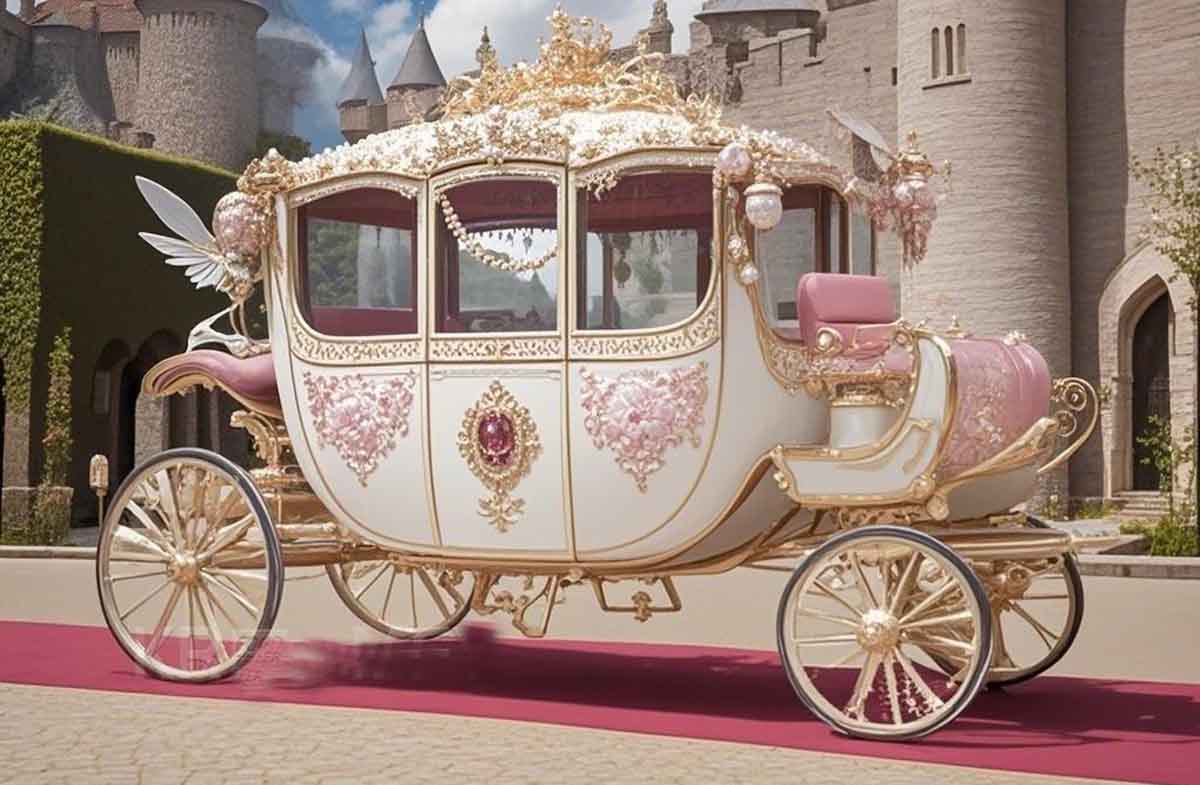
Material Selection and Durability Treatment: The steel plates undergo moisture-proof and anti-corrosion treatment to withstand outdoor environments. Metal components (such as axles) are treated to prevent rust, ensuring long-term use without cracking or corrosion; modern replicas also incorporate safety standards, such as reinforced frames and optimized traction devices, to improve driving stability.
Decorative Features and Cultural Elements: Decoration focuses on both practicality and aesthetics, commonly featuring carved patterns (such as traditional motifs) and leather harness making. The rope weaving and leather decoration can be traced back over two thousand years. Some designs draw inspiration from the Han Dynasty style. The front of the carriage has a driver’s seat, and the rear is the passenger compartment, with balanced proportions and a dignified and elegant appearance; the color scheme often uses red and gold, fitting the festive theme of weddings.
Modern Applications and Customization: Currently, wedding horse carriages are mostly used for scenic tours and traditional Chinese wedding processions. Manufacturers customize the size and decoration according to customer needs, such as replicating new Chinese-style Han Dynasty carriages, preserving the mortise and tenon structure while incorporating modern safety technologies. One carriage requires over 100 mortise and tenon joints and dozens of processes, with meticulous hand polishing to ensure exquisite details, meeting both cultural display and practical needs.